







Sydney’s leading brokers on building for what’s next
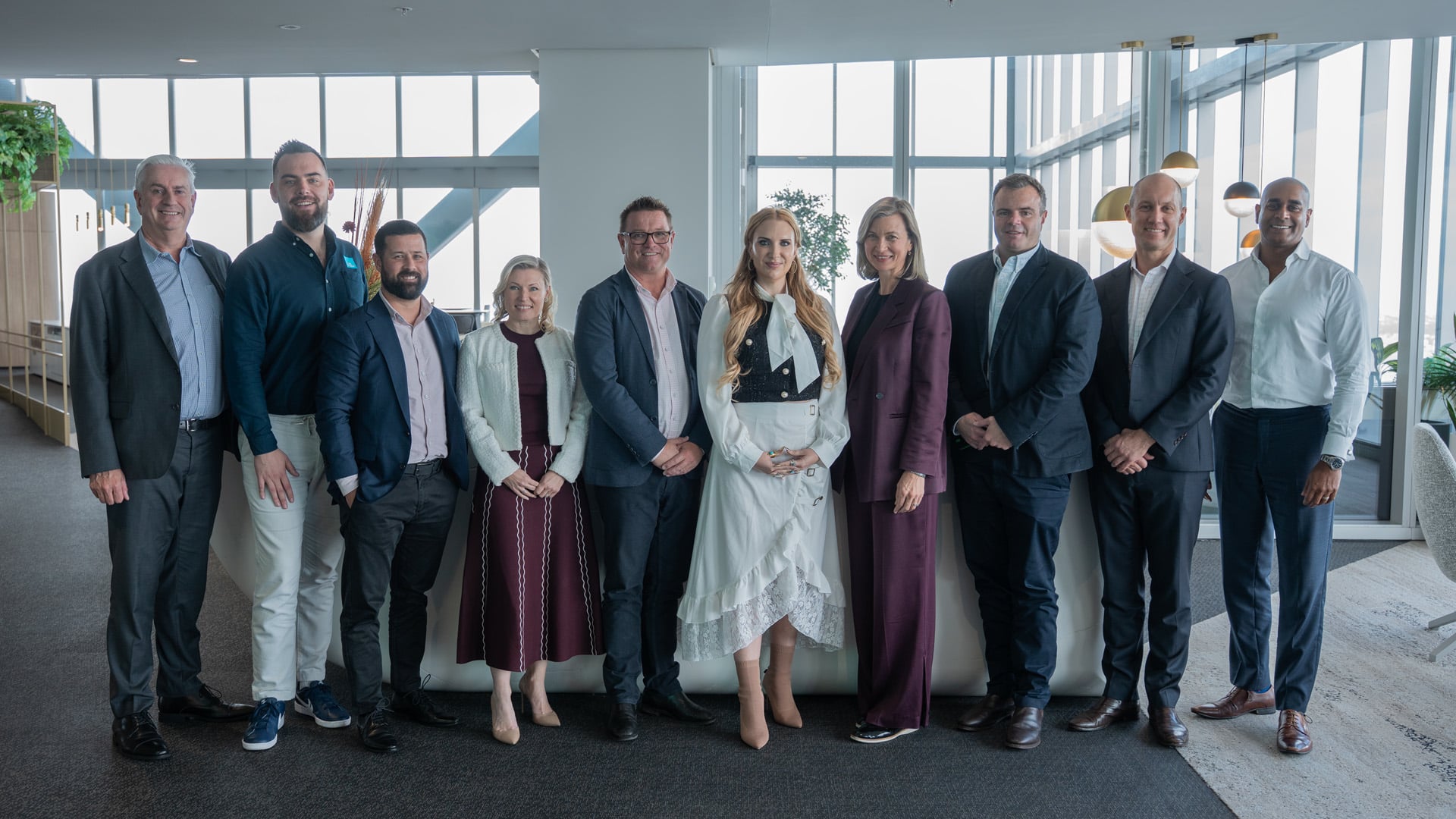
Eight brokerage business leaders sat down at NextGen’s North Sydney office in August for the second of the 2026 Broker Advisory Roundtables, closing out the 2026 series following the Melbourne session, to discuss where their businesses and the industry are heading.
Around the table (pictured above) were Patrick Moore (Loan Market Clayfield), Nathan Smith (Birdie Wealth), Melanie Cunliffe (Indigo Finance), Steve Bourne (Lending Association), Katie Thomas (Focus Finance), Adam Boyle (ABL Wealth), Mark Kevin (Mortgage Advice Bureau) and Aaron Christie-David (Atelier Wealth). The discussion was facilitated by Renee Blethyn, head of broker partnerships at NextGen, and Tony Carn, chief customer officer at NextGen.
“What I remain very optimistic about is those who choose to stay in this industry because of the pride they have in what they do and the collective sharing of information,” said Blethyn. “It’s not just about having a successful business, it’s about how important what you do is for the people you serve.” That optimism was easy to see in the room.
The group spanned very different operations: high-net-worth and complex lending specialists, diversified multi-office businesses, newer entrants and 20-year veterans, residential and commercial. What they shared was less a common business model than a common posture: each is actively shaping what their business looks like next, even in a market where plenty is outside their control.
“I decentralised the key person risk of me, so that can go through the entire team, from every level”
– Katie Thomas, Focus Finance
Building for scale or building for depth
Much of the discussion centred on how brokerages are positioning themselves for the next few years, and two distinct strategies emerged. Steve Bourne of diversified lending business Lending Association framed it as a choice. “You either need to have scale to do everything well, or you become very good at a narrow customer segment. There’s no in-between,” he said.
Mark Kevin of Mortgage Advice Bureau is betting on the smaller, sharper end of that spectrum. “My business, in two or three years, could just be two or three of us here, a couple offshore, and everything else digital,” he said. “And we could still do a massive volume.”
Patrick Moore of Loan Market Clayfield predicted the opposite trend for much of the market: independent brokers consolidating into larger, better-resourced businesses with the scale to invest more in technology and reach.
A risk no broker can outrun alone
As in the Melbourne discussion, fraud came up as a concern every broker in the room shared. Bourne pointed to a harder problem than his own vigilance: the risk of being penalised for fraud committed elsewhere in the chain, by a client, an accountant or a referral partner, with no fault of his broker network.
Adam Boyle, founder of ABL Wealth, raised a related gap: lenders detect fraud inconsistently, and nothing joins the dots between them. “If you’ve picked up on how to detect an AI’d payslip and the other bank hasn’t, why could that not be centralised?” he said.
What brokers wanted wasn’t just better tools individually, but shared visibility, so a red flag caught by one lender doesn’t go unseen by the rest.
Building what off-the-shelf can’t offer
The strongest businesses in the room aren’t waiting for a platform to solve their specific problem. They were building it themselves.
Bourne, who manages a business that has grown through acquisition and has loan books spread across multiple aggregators, has built his own CRM to pull data from disconnected systems into one view. “The investment is worth it to run the business more effectively,” he said.
“You either need to have scale to do everything well, or you become very good at a narrow customer segment. There’s no in-between”
– Steve Bourne, Lending Association
Melanie Cunliffe, founder of Indigo Finance, took a similar approach to a different problem: managing her back book. She moved that work onto an AI platform that can flag a client’s available equity automatically, freeing her team for more proactive client work instead of manual reviews. “As the industry gets choppier, nurturing the back book and making sure clients are really well serviced matters more than ever,” she said.
Katie Thomas of Focus Finance went further still. She used years of recorded client and team meetings to build what she calls a coded version of herself – an onboarding platform that captures how she actually works: her conversational style, how she reads a client, how she trains new team members. “I decentralised the key person risk of me, so that can go through the entire team, from every level,” she said.
All three solutions are built entirely around their own specific business needs, and none of these could have been bought off the shelf.
Building the next generation of brokers
Thomas pointed to how quickly a personal brand can now be built. Where new entrants once needed years in the industry to earn trust, a following on social media can now do it in a fraction of the time.
Nathan Smith of Sutherland Shire business Birdie Wealth has been a broker for 20 years and sees the same shift. “The pathway to becoming a broker has always been really easy,” he said. “But you weren’t a trusted broker for 5 or 10 years, you had to put in the time.”
“I love the concept of time in role,” added Moore. “Come join my business, do a couple of years, and I’ll take you through it.” Between them, the case for a more formalised structure: time spent as a para-broker or credit analyst, learning alongside an experienced broker, before being handed a broker code of their own.
‘We’re all competitors, but it never feels that way’
What stood out most, in Sydney as in Melbourne, was how naturally this group connects their own choices back to the industry’s reputation as a whole. “I think, like all of us, we have a desire, and partly an obligation, to think about this industry as a whole, not just our own business,” said Aaron Christie-David of Atelier Wealth. He calls it ‘the pursuit of potential’, his own phrase for what keeps him coming back to conversations like this one.
That showed up in a quieter way, too, in how little rivalry sat in the room. Eight brokers running very different businesses spent two hours being remarkably open with each other about what’s working, what isn’t, and what they’re building next, a kind of trust that isn’t a given between people who could just as easily see each other as competition.
“Technically, you could say we’re all competitors, but it never feels that way,” said Cunliffe. “Everyone’s so sharing, with knowledge, with best practice.”
That’s not a small thing in an industry that now facilitates more than 80% of new residential home lending in Australia, moving through as much change, in technology, in client expectations, in what ‘good’ looks like, as any of them can remember.
We’re grateful to every broker who gave us their time and their honesty across both roundtables this year, and we remain committed to listening, learning and helping shape what comes next alongside them.
This article was originally published in Australian Broker on 19 October 2026.
Latest articles
Article
Celebrating Beyond Bank Australia: First-Party Open Banking

ApplyOnline tip
Order valuations directly within ApplyOnline
Article
Inside Beyond Bank’s journey from legacy platform to connected lending ecosystem

ApplyOnline tip
More ways for applicants to verify: introducing email delivery for NextGenID
XS
SM
MD
LG
XL
XXL.