








Melbourne’s leading brokers on navigating change and building to last
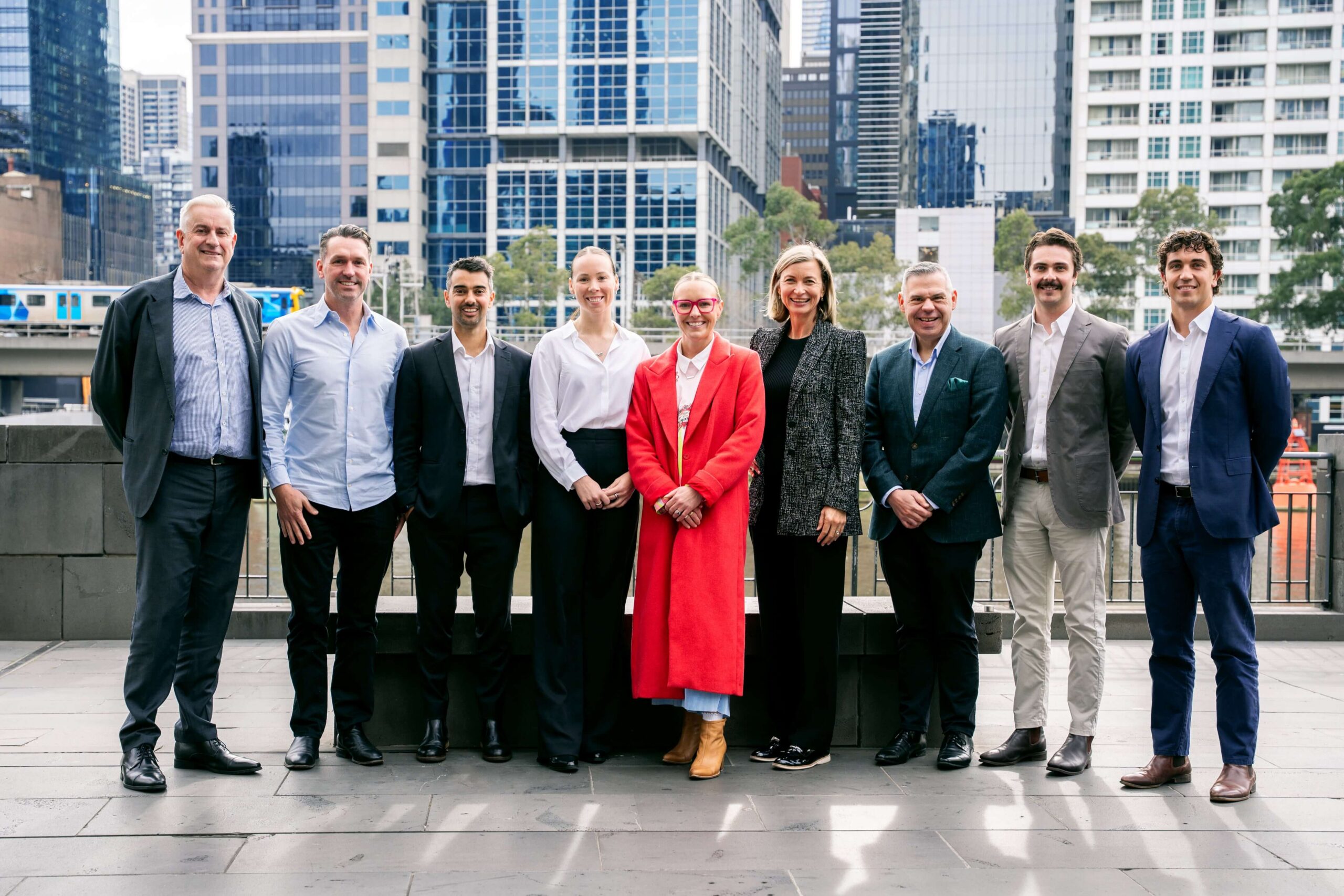
NextGen brought together seven Melbourne broker business owners for its 2026 Broker Advisory Roundtable (pictured), almost two hours of unscripted conversation about where the industry is heading. Joining the discussion were Damien Roylance (Entourage), Grant Arbuckle (Loan Studio / GA Finance Solutions), Evelyn Clark (Everlend), Kate Littlejohn (K Finance Co), Chris Foster-Ramsay (Foster Ramsay Finance), Elijah Barrett (Mortgage Choice – Barrett Brokering) and Lucas Barrett (Mortgage Choice – Barrett Brokering).
Leaders in the room
What came through across the room was a shared confidence, brokers who are optimistic about where their industry is heading rather than anxious about it, and clear-eyed about the work required to remain at the forefront. That confidence showed up first in how they talked about competing with one another. “I don’t see the competitors as brokers, in fact I want to use that resource more,” said Elijah Barrett.
“At the end of the day, clients want that final sign-off from a human.”
— Evelyn Clark, Everlend
The bigger concern, brokers agreed, was lenders reclaiming ground directly. “The lenders are going to become far more prominent and take back market share,” said Arbuckle. Littlejohn said the risk is greatest for simpler transactions: “Very soon it will be that if you’re a vanilla payslip mortgage customer, you don’t need a broker at all.” The response wasn’t to compete harder on the same terms, but to build something a rate comparison can’t replace. “If it’s going to be the biggest financial decision of their life, an internet banking app can’t do that,” said Lucas Barrett.
Clients are asking more — and trusting differently
Brokers agreed that clients are showing up more informed, and more demanding of speed. “For us, the customers have become far more savvy. They do a lot of research online prior to engaging,” said Foster-Ramsay. “The most important thing they’re seeking is speed. You can no longer take time in response, you need to have something pretty quickly ready to go.” He said that had raised the stakes on the relationship itself: “It’s really the relationship part, and the trust part is probably more important than it’s been before.”
That research is increasingly AI-assisted. “When they start using AI, particularly as a search platform to ask questions, there’s a lot of questions coming through now that aren’t necessarily relevant to that client,” said Clark. “At the end of the day, clients want that final sign-off from a human.”
Existing clients behave differently again. Littlejohn, who moved into broking from a bank last year and works primarily with self-employed clients, described the relationship extending well beyond the borrower: “My relationship is just as strong with their accountant, with their lawyer, with their financial advisor. I call them the money crew.”
Building AI in, not bolting it on
Enthusiasm for AI ran through the room, but it was enthusiasm with a process behind it. Elijah Barrett described how his aggregator now vets tools before they reach his desk: “It’s approved for us from a due diligence, risk, safety and compliance perspective, and that’s changed our business. We’re lucky we don’t need to do those checks ourselves.” Once that trust is established, the result has been transformative: “Utilising it has been revolutionary in our business.” Roylance shares the same appetite, building his own compliance tools on top of what’s available: “AI is going to be a big part of my life and my team’s a lot.”
All brokers agreed on the importance of data security when using AI, “We’ve played it conservative,” said Clark. “I’m not going to jeopardise the next however-many years of my life and career to save myself a little bit of time,” said Elijah Barrett. The tools worth keeping, brokers agreed, are the ones properly vetted, rather than rushed to market.
Open Banking: the fix for portals, retention and verification
Open Banking came up unprompted more than any other technology, raised as a practical answer to three separate frustrations.
The first is retention. Lucas Barrett uses consent-based data to trigger the first annual review: “We use Frollo and they provide the 12 months of consent one month after settlement, and that leads us to that first year review. So when you’re touching base with them, it’s bang, there’s your value.”
The second is visibility across a client book. Roylance said lender portals still fall short of a basic need: “What I always want is to just look at the portals and get a list, let me scroll, sort by highest balance or highest interest rate. Nobody’s ever done that.” Consent-based data gives brokers that view consistently across every lender, without the portal.
“We’ve got this idea floating around of a ‘$1 billion broker with no staff.’ I don’t think that’s unrealistic in five years’ time.”
— Damien Roylance, Entourage
The third is fraud. Littlejohn described a case where every document had been falsified: “Payslips were doctored, bank statements were doctored, everything was doctored. It wasn’t until it got to the fraud team. It was the technology that ran it through and picked it up.”
Advisory, not transactional
Looking five years out, brokers described administrative work shrinking and the client relationship expanding to fill the space. “Broking will become more of an advisory-type role,” said Arbuckle, though he was clear the transition won’t carry everyone: “You will be found out whether you’re actually good at what you do or not, and tech can only save you to a certain point. There’s going to be a continued cohort that will just slip away.”
Roylance expects the shape of the business to change with it: “Less admin people. We’ve got this idea floating around of a ‘$1 billion broker with no staff.’ I don’t think that’s unrealistic in five years’ time.”
Lucas Barrett summed up where that leaves brokers who keep adapting: “The business you’re running right now is 100% guaranteed not to be the same business you’re running in five years. But that’s how every business has been, and will continue to be.”
What the room agreed on, more than any single tool or threat, was that the businesses built to last are the ones staying closest to their clients, not the ones moving fastest.
This article was originally published in Mortgage Professional Australia on 31 August 2026.
Latest articles
Article
Celebrating Beyond Bank Australia: First-Party Open Banking

ApplyOnline tip
Order valuations directly within ApplyOnline
Article
Inside Beyond Bank’s journey from legacy platform to connected lending ecosystem

ApplyOnline tip
More ways for applicants to verify: introducing email delivery for NextGenID
XS
SM
MD
LG
XL
XXL.