








Mortgage broking comes of age
With broker share of new residential lending at more than three quarters of the market and some of the biggest months ever for lodgements being recorded this winter, mortgage broking has come of age.
But broking’s story doesn’t stop with market dominance. The industry that began as the underdog must now navigate the responsibilities of incumbency – a shift that brings both opportunity and unease. Brokers face a new set of pressures: housing policy changes, keeping pace with rapid advances in technology, recruiting and retaining the right talent, and guiding clients who arrive armed with information – and sometimes misinformation.
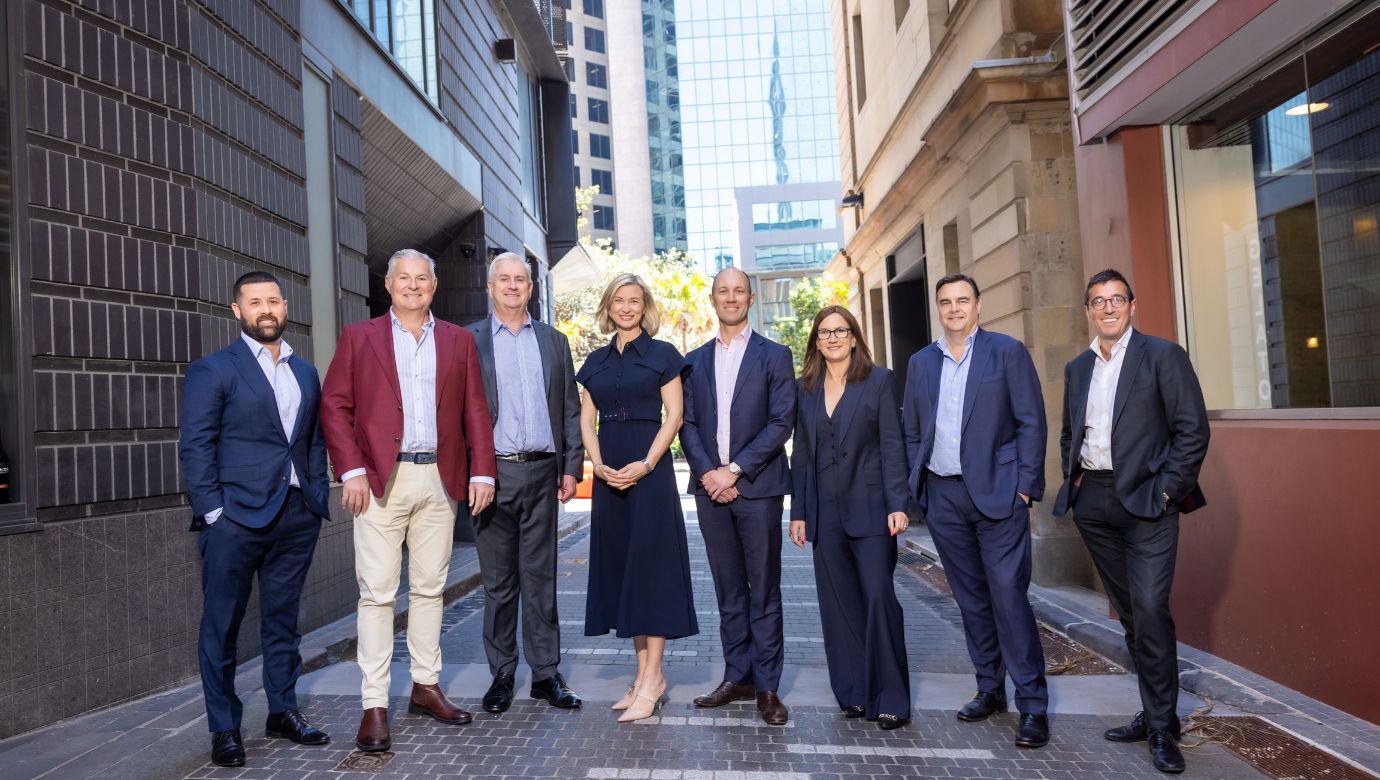
As the industry further matures, the playing field continues to throw up challenges. Against this backdrop, representatives from industry technology partner NextGen recently met at Cafe Sydney with Australian Broker and a group of mortgage brokers to discuss the current state and future direction of the industry.
The conversation, moderated by NextGen head of broker partnerships Renee Blethyn, ranged across market dynamics, evolving customer expectations, competitive pressures and the strategic initiatives brokers are implementing to future-proof their businesses. Capturing authentic insights from industry leaders on how they’re navigating today’s challenges while positioning for tomorrow’s opportunities, the discussion underscored how the industry must adapt to change while balancing technological efficiency with the human relationships that remain at the heart of mortgage advice.
Market momentum builds
Tony Carn, chief customer officer at NextGen, pointed to several factors driving broker business.
“One interesting thing we’ve seen over the last year is sort of a stabilisation of turnaround times across the lenders … but the median across the board is stagnating at around six to six and a half business days to get unconditional approval,” Carn said.
However, some applications are being processed much faster. “What we’ve seen rising slowly over the last year, from about 25% to about 35% of loans, is what we call straight-through processing – it goes to a lender, they don’t ask for anything else, and they process that. We see that turnaround time is much lower. It’s around two to two and a half days.”
Carn noted that some smaller lenders are achieving straight-through processing rates of up to 60%.
The market dynamics have also produced some surprising competitive shifts. “When we look at lodgements in the market, one big four lender has been number one for quite a while, and they’ve lost that position. And they’ve lost it to a lender who’s not paying cashbacks,” Carn observed, referring to Macquarie Bank’s rising market presence. Another notable trend is increasing loan sizes. “One of the things that keeps ticking up at about 10 grand a month is the average loan size in Australia. It was $698,000 in July and $710,000-plus in August,” he said.
First home buyer initiatives are expected to accelerate this trend, though industry leaders have mixed views on the policy’s long-term impact. “It’s going to bring forward a lot of demand from the first-time buyers,” said Mark Kevin, managing director of Mortgage Advice Bureau. “I saw an article the other day; it’ll bring forward 70,000 first home buyers into the market who were otherwise going to buy at some [later] point.”
But Kevin expressed concern about unintended consequences. “While they might be saving $30,000 here in LMI [lenders’ mortgage insurance] and $20,000 in stamp duty there, they’ll be paying more in an increase in price pretty quickly on the property,” he said. “I think it’s all demand side but no supply side, and that’s been the biggest issue with these initiatives for many years.”
Troy Phillips, founder of FirstPoint Mortgage Brokers, took a more optimistic view of the policy. “I think it’s a really good initiative. The government doesn’t have to build a mortgage-backed security market like the US. It’s just going to guarantee debt,” he said.
But he also saw potential repercussions down the track. “The elephant in the room is going to be negative gearing. Eventually that’s going to come to a head.”
The traditional pillars of lender relationships – price, policy and service – remain important, but their relative significance is changing. Will Foster, director of Foster Finance, argued that price dominates decision-making. “I don’t think a lender any more, with the technology where it is, can try and sell their offering on one of those aspects,” he said. “Price is always going to be the key component. And I think it’s probably 90% of the decision in the vast majority of cases.”
Foster emphasised the importance of pre-assessment confidence for experienced brokers. “It’s a huge deal for us to have confidence that it will be approved before it goes to the lender, because there’s no question that, if the application is declined on the first attempt, we will lose that client nine out of 10 times,” he said.
Supply constraints drive housing challenges
Andrea McNaughton, managing director of Loan Market, highlighted the policy tensions affecting different markets. “In Victoria, there are so many land taxes and landlord taxes now, most people are looking at how not to own a property,” she said. “I think all of those settings around those policies are going to have to be tackled together, and no government is going to want to reduce immigration, because of what it does to GDP.”
Housing is also being affected by new social phenomena that extend beyond policy settings. Foster said, “We’re seeing a lot more people who are in their early 50s through mid-60s who are having big change-of-life moments. They might be selling a business, but they might still have kids in school or uni, or they might want to borrow a bit of money to do up their family home before they then sell it.”
Demographics are playing a key role as society changes, Kevin added. “People are living longer, and they’re also staying in their big houses,” he said. “I look at my parents, and my wife’s parents who are in their 70s, in five-bedroom houses in nice locations, and when you talk to them they say, ‘I’ll die here’ – there are no downsizing incentives for them to move.”
Nathan Smith, founder and director of Birdie Wealth, also feels that new supply isn’t matching demand patterns. “More units are going up – one- and two-bedroom units – but every time they do that, they knock down more family homes. And family homes are what we actually need,” he said.
Phillips suggested that radical policy changes might be necessary to address the housing mismatch: “You’ve got to means test the family home as well. You can’t have two elderly people living in a $7 million family home [and getting the pension]. That said, the government should provide tax breaks for these people to use super on sale of the family home. They can then live a better life and not rely on a government pension.”
He pointed out that the family home in such a case was the financial equivalent of three or four properties. “You’ve got to … free up stock,” he said.
Customer education creates new challenges
The profile of mortgage clients has shifted dramatically over the past two decades. Where once brokers competed primarily against bank branches with relatively uninformed customers, they now face clients who arrive with extensive research but questionable advice sources. “Twenty years ago, when I came to a broker, they were uneducated; they didn’t know what a home loan was,” said Smith. “Now they’re coming in with too much information. They’ve got access to more information than they need.”
The challenge has become about filtering and contextualising information rather than providing it. “The job of the broker was to take that client and then educate them on how to get a loan and what lending is. Now it’s a matter of narrowing down all this information that they’ve got into specific advice for them,” Smith explained.
Theo Chambers, founder and CEO of Shore Financial, highlighted how social media algorithms compound the issue. “If you show an interest in this type of content [on social media], the algorithm is serving you more of that content. And next thing they’re a guru, in their eyes, with some of the information actually being incorrect and misleading,” he said.
Chambers illustrated the problem with a specific example: “It’s amazing how educated first home buyers can potentially even be as an investor … they come wanting to buy a property in another state as an investment purchase, and they know to buy it in a trust to preserve their buying capacity. They know how to structure things to then go on to the next one and use equity for their second purchase.”
The emergence of unregulated advice sources presents particular challenges. Chambers had seen clients “paying these buyers’ agents 15, 20, 25 grand to go find an investment property in Bundaberg or Townsville, but they won’t pay a financial planner. They’re hesitant to pay a financial planner for qualified advice [even though it costs] less than half the amount.”
McNaughton sees an opportunity for brokers in this environment. “I think you can’t regulate your way to market share growth, and I think the opportunity for brokers is that you’re coming from a position of trust. No one trusts financial planners, and no one trusts banks,” she said. “I think the industry and brokers who have been doing it so long with their client base whose children and next generation are coming through – you’re not having to fight for that relationship. You’re a proven trust-maker.”
Phillips expressed frustration with the regulatory inconsistency around social media financial influencers and property spruikers. “These people are offering financial advice, and they’re offering riskier financial advice than financial planners,” he said. “They need to be regulated because, simply, they are offering financial advice.”
Changing competitive dynamics
Foster highlighted how the main competition had changed dramatically as brokers rose to dominance. “One of the biggest changes that I’ve seen in my time in the industry – when it started out, probably for the first 10 years of being a mortgage broker, we were really just competing against bank branches, and that was very easy,” he said. “And now, increasingly, we’re competing against other brokers and not bank branches, and that’s much more difficult.”
The role of technology in mortgage broking is evolving rapidly, with some players predicting that brokerages will operate dual models in the future. Kevin said, “I can see a world where a brokerage has an AI-enabled digital offering with a broker kind of checkpoint in the back end. I think the brokerage of the future is going to have to have that digital partner.”
Kevin sees this hybrid approach as essential for competing across different market segments. “I think that where a lot of them have failed is people get 90% through the digital process and they go, ‘I just want to talk to a human to validate I’ve ticked all the right things and put all the right stuff in’. That might be where we compete with the vanilla loans the fintechs and the banks are coming out with,” he explained.
This technology-first approach is already delivering results for Kevin’s business. He appointed a young broker as ‘head of broker tech’ to drive AI initiatives and keep pace with client expectations. “Just some of the initial stuff we’re starting to do with AI… We should be able to double volume without putting another body on in the next 12 to 24 months – and I couldn’t say that 12 months ago,” he said.
Kevin foresees AI handling routine tasks while brokers focus on validation and advisory roles. “I think the brokerage of the future is going to have to have that digital path where you can go in and you can stick all your docs in, and the AI will assess it all. It’ll spit out a recommendation,” he explained. “But there’s that 10% at the end, where you just have to talk to a human to validate what you’ve done.”
He believes successful brokerages will operate dual models offering streamlined digital services for simple deals alongside “trusted adviser” relationships for complex matters. “I think you’re going to have to play in both those spaces or choose one.”
McNaughton cautioned against underestimating the human element. “AI will shake up the process, but it will need a broker to drive the AI,” she said. “Unless you understand what a broker does and the complexity of the environment in which they work to find the very best loan for every client, it’s hard for tech to build AI that competes with the power of that deep and specialised proposition.”
Chambers sees AI potentially extending beyond application processing to customer relationship management. “The other part no one really is focusing on is the actual lead generation point of view, where it’s interacting with your database and using information on your customers to send targeted emails. It makes them feel like they’re actually speaking to a broker, but they’re not until the point they book in a call, and the broker has all this information in front of them about what’s already happened,” he explained.
Phillips takes a philosophical approach to technological change. “Remember when the World Wide Web was going to be this information superhighway, and we all were so scared of it? It’s the best thing that happened,” he said.
The unpredictability of how AI will develop is also something to keep front of mind. “Anything we think AI is going to look like, it will not,” Phillips said. “It will be better!”
Talent acquisition becomes a strategic priority
The industry’s professionalisation has created new challenges in talent acquisition and retention.
Kevin is targeting candidates with technology backgrounds rather than traditional mortgage experience – a radical change from typical recruiting practices just a few short years ago.
“I’m not looking at your business going, ‘I want to poach one of your brokers.’ I’m actually looking at fintechs and consulting businesses and people with technology backgrounds,” he said.
He is more interested in what level of tech prowess a candidate can bring to his business than he was a few years ago, as part of a strategy to recruit “the skill set of the future … maybe the graduates we should be targeting are more tech related”.
This focus on technology reflects broader changes reshaping the industry. Chambers predicts traditional offshoring models will become obsolete as AI capabilities advance. “I personally think offshoring in five years won’t be a thing. I think that’s replaced by AI,” he said. “In five years, you’ll be using AI to get recommended a product or service.”
But this shift towards a more tech-enabled broking world is also part of broader industry consolidation, Kevin observed. “I think the industry is going to keep consolidating. I think it’s going to keep going down that path that financial planning went through over the last decade plus,” he said. “I think those smaller operators – AI is going to give them an edge they didn’t have before, if they use it properly, but if they don’t, they’re going to die very quickly.”
Phillips emphasised culture as the foundation of successful businesses. “The biggest thing in a business is culture. You’ve got to build it. You’ve got to have someone that wants to come to work,” he said, noting the importance of maintaining team harmony while adding diverse skill sets.
The succession planning challenge adds another layer of complexity. McNaughton highlighted that many brokerages had an average age in the mid-50s range and were perhaps not interested in mentoring a new generation. “A lot of brokers are tired from writing huge volumes and looking to capitalise and/or take a well-earned break.”
Specialisation drives future growth
The industry is witnessing increased specialisation as brokers seek competitive advantages in specific niches.
Self-managed superannuation funds represent one growing speciality area, with total asset allocation topping $1 trillion for the first time last year. Kevin noted unprecedented interest in this type of lending. “We do quite a lot of self-managed super funds, and we’ve got probably unprecedented enquiry at the moment in that space,” he said.
Chambers attributes some SMSF growth to investor-focused buyers’ agents promoting rentvesting strategies and wealth creation in property. “We’re seeing so many first home buyers in Sydney now turn into becoming investors in regional areas or major cities in other states. And it’s the same thing – they’re looking at their super,” he said. “So many super funds underperformed for the last decade, and they’re like, ‘Well, I could leverage this and even with only 5% capital growth I’ll drastically outperform my superfund.’ ”
Smith feels that specialisation is focused on delivering better service in one area, rather than being a jack of all trades. “Once upon a time, the broker had a shopfront and said, we do home loans, SMSF, investment, car loans. And now they’re starting to niche down,” he said.
Commercial lending presents another opportunity for broker growth. Foster identifies structural advantages for brokers in the commercial space. “The hold that the traditional banks have over multiple products held by people is going to go because there’s a lot of different offerings in payments, finance, transaction accounts,” he said. “It’ll just be that commercial lending facility that’s left, and that would then be ripe for brokers to pick up on.”
Private lending is also emerging as a significant growth area. Chambers noted that “the next generation are actually more focused on private lending and the products that the major banks don’t offer, because they only get a voice through brokers”.
Phillips has observed improvements in private lenders’ pricing and service. “The good ones are pricing better. They’re sharper at pricing. So, once they used to be hard-money lenders, and I think the brokers have worked that out,” he said. “So they might be 50 or 60 points above the bank’s commercial facility, and the broker will take a good chunk of a bank’s customer away from them.”
Indeed, the industry’s attractive trail commission structure seems to have caught the attention of private equity investors, though their understanding of the business model varies. Kevin expressed scepticism about external investment approaches. “I think what they underestimate is the relationship aspect of what we do,” he said.
Chambers sees consolidation as inevitable and believes private equity will play a significant role. “There’s going to be a big consolidation drive, and private equity are the best [positioned] to sponsor it,” he said.
The mortgage broking industry stands at a crossroads between its entrepreneurial past and an increasingly professional future. The sector’s success in capturing market share has created new challenges around talent, technology and competition that require different solutions than those that built the industry.
The brokers who thrive will likely be those who can balance technological efficiency with the human relationships that remain at the heart of mortgage advice. The challenge ahead for brokers is less about proving their place and more about guiding others. As technology reshapes the market and client needs grow more complex, the industry’s future will depend on wisdom, patience and the ability to pass knowledge to the next generation.
This article was published by Australian Broker on 20 October 2025.
Latest articles

Article
Celebrating Beyond Bank Australia: First-Party Open Banking

ApplyOnline tip
Order valuations directly within ApplyOnline

Article
Inside Beyond Bank’s journey from legacy platform to connected lending ecosystem

ApplyOnline tip
More ways for applicants to verify: introducing email delivery for NextGenID
XS
SM
MD
LG
XL
XXL.